NICOLE EISENMAN
etchings

Fleet Week, 2010. Drypoint/aquatint etching with chine colle. Paper Size: 16 x 12 in. Edition of 15
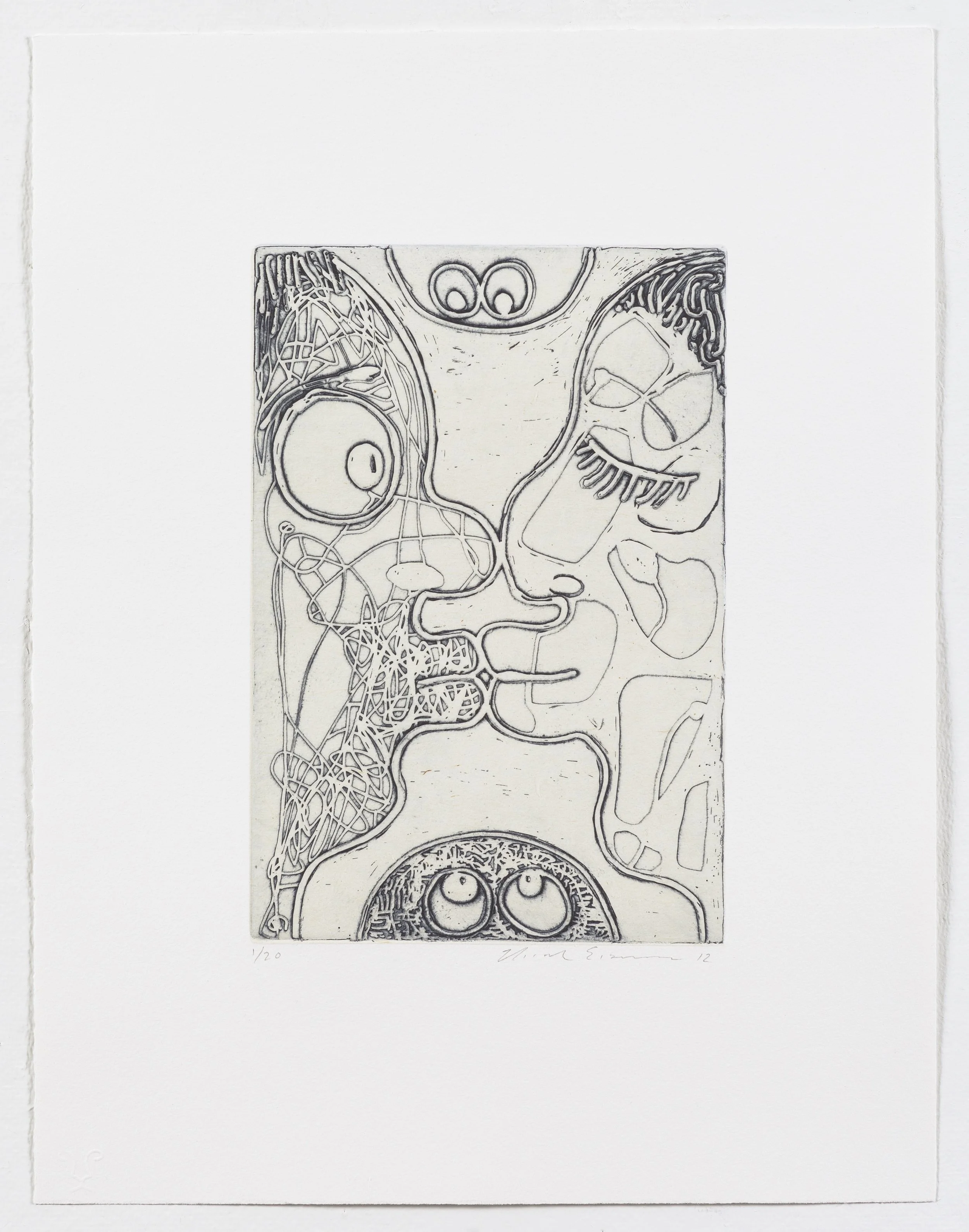
Fourpack, 2010. Etching with chine colle on Hannemuhle. Paper Size: 16.75 x 12.875 in. Image Size: 10 x 6.75 in. Edition of 20.
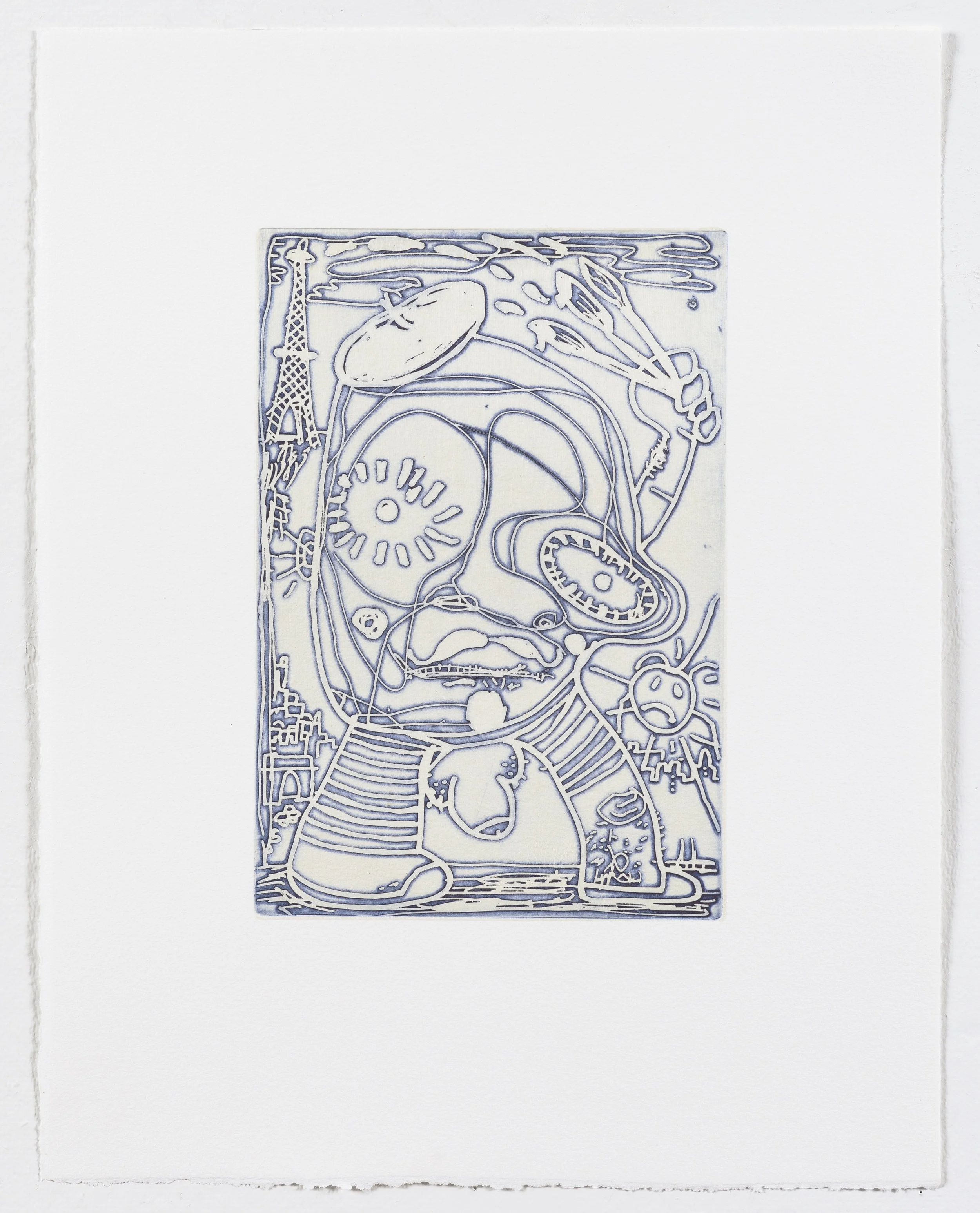
Artist, 2010. Etching with chine colle on Hannemuhle. Paper Size: 16.75 x 12.875 in. Image Size: 10 x 6.75 in. Edition of 15

Architecture Head, 2023. Etching with hand-coloring. Paper Size: 22.5 x 19.25 in. Plate Size: 13.875 x 11.875 in. Unique print.

Old Queen, 2023. Intaglio etching with chine colle. Paper Size: 23.5 x 18.75 in. Plate Size: 16 x 11.25 in. Edition of 20.

Old Queen, 2023. Relief etching with chine colle. Paper Size: 23.5 x 18.75 in. Plate Size: 16 x 11.25 in. Edition of 20.

Three Heads, 2023. Intaglio etching with chine colle. Paper Size: 22.25 x 17.75 in. Plate Size: 13.75 x 9.75 in. Edition of 10.

Three Heads, 2023. Relief etching with chine colle. Paper Size: 22.25 x 17.75 in. Plate Size: 13.75 x 9.75 in. Edition of 20.

Smoker, 2023. Relief etching with chine colle. Paper Size: 21 x 12 in. Plate Size: 11.75 x 3.75 in. Edition of 20.

Smoker, 2023. Intaglio etching with chine colle. Paper Size: 21 x 12 in. Plate Size: 11.75 x 3.75 in. Edition of 20.
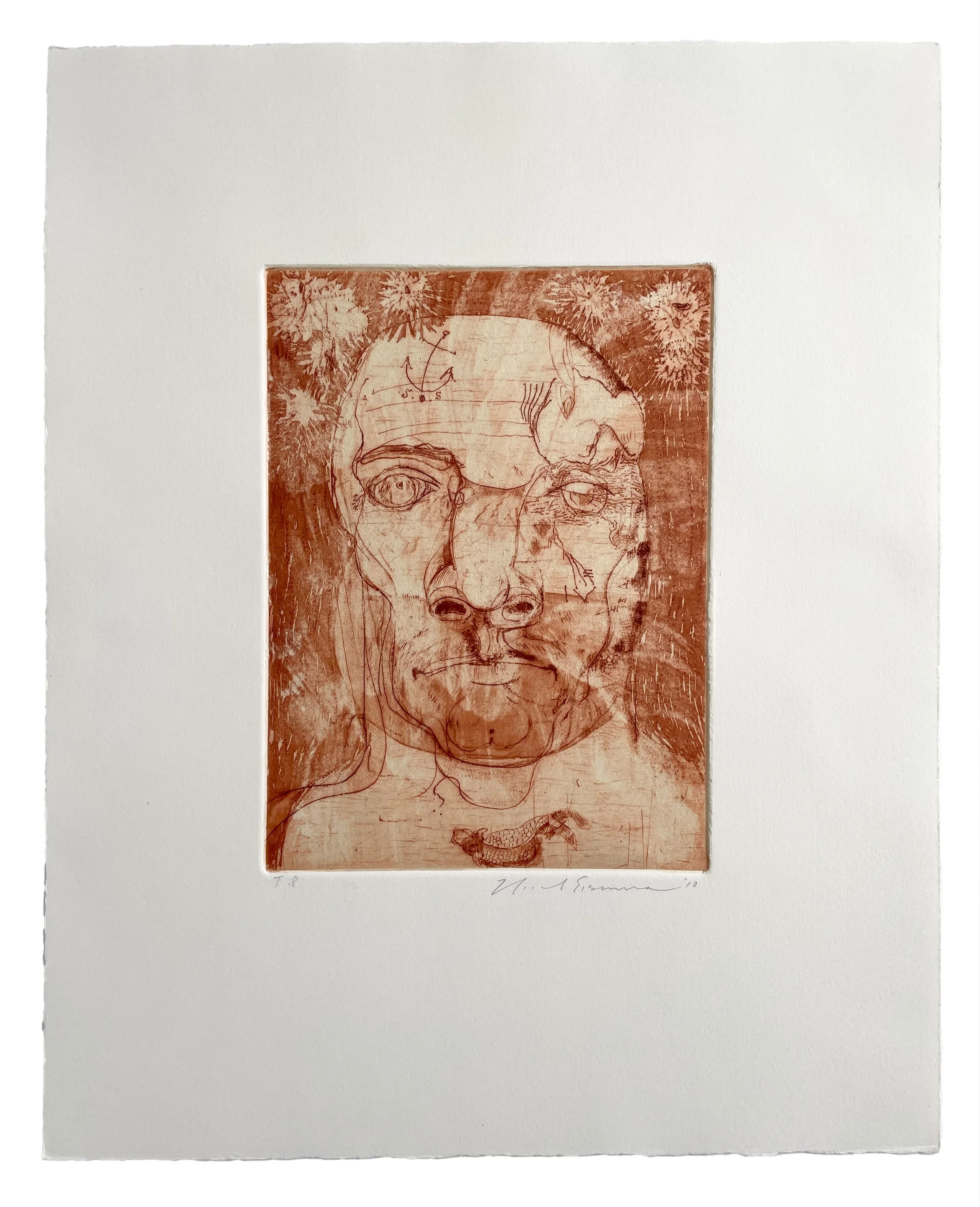
Fleet Week, 2010. Drypoint/aquatint etching with chine colle. Paper Size: 16 x 12 in. Proof
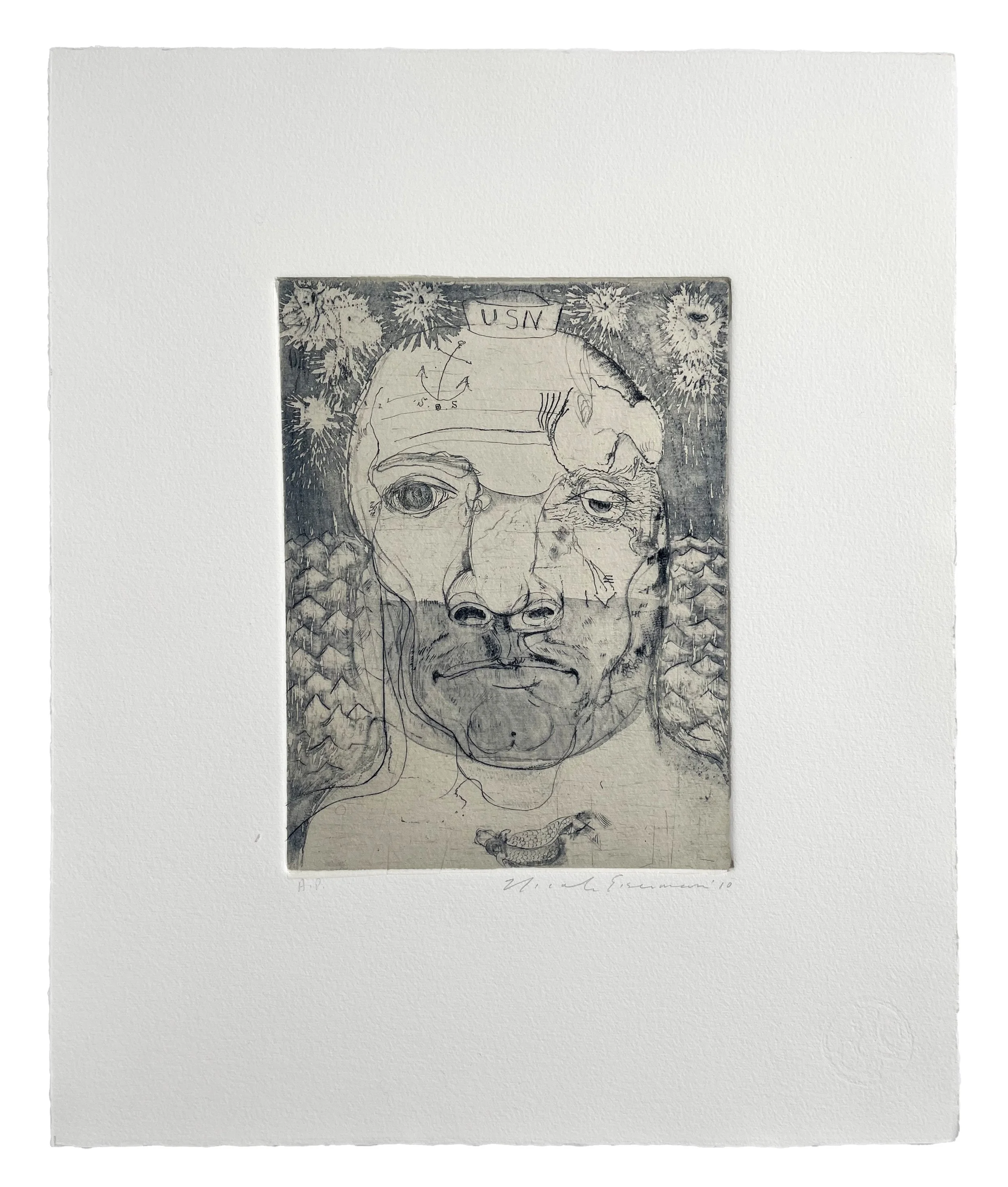
Fleet Week, 2010. Drypoint/aquatint etching with chine colle. Paper Size: 16 x 12 in. Proof
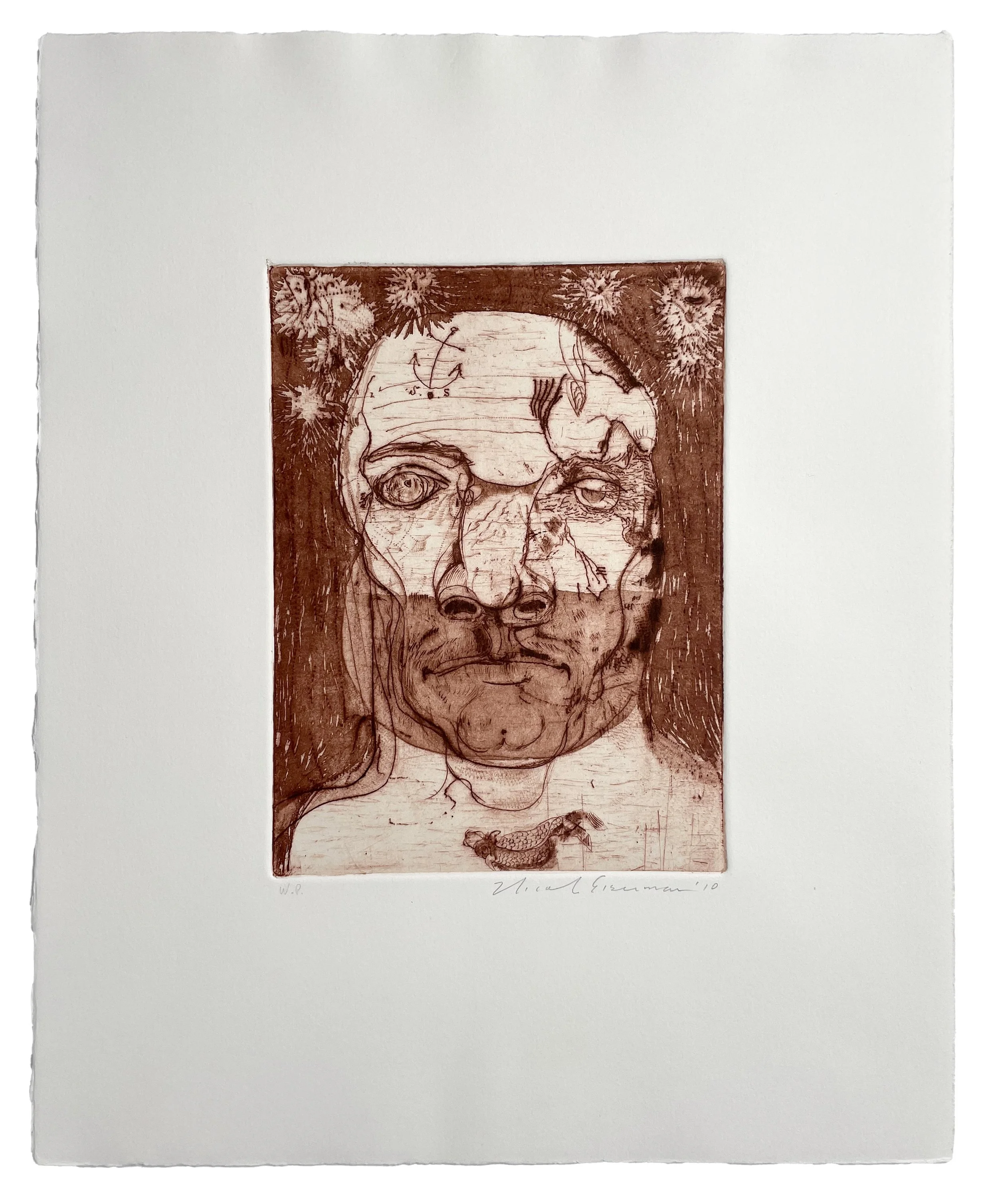
Fleet Week, 2010. Drypoint/aquatint etching with chine colle. Paper Size: 16 x 12 in. Proof
PRINTS 2023
Nicole Eisenman’s recent prints from Jungle Press explore etching in two directions. The prints began as a“relief etching”, where Eisenman was able to draw on the copper plate, then etch the drawing into relief on the surface. Each plate was etched for hours. Then, the plate was inked with a roller and printed like a woodcut. The plates were then inked in the traditional intaglio method–creating two versions of the same image. A nuanced shift from one “interpretation” of the plate to a second creates a dialogue between the two inkings.
In “Smoker” we see a figure smoking at the bottom of the page. The smoke swirls around and above the head into a complex woven pattern.
In “Sleep Painting”, a reclining figure in bed is surrounded by a pattern of lines as the artist paints onto a small canvas.
“Old Queen” presents a world-weary monarch leaning in to the viewer. The gaze is shifted slightly downward, looking past us into the space of the room.
In “Three Heads”, the structure of a grid of lines dominates the format. The two figures below stare out of the picture toward the viewer. The two faces seem to meld together, sharing two sets of eyeballs. Above the couple, a larger skull-like head on its side looms forebodingly over all.
With “Architecture Head”, Eisenman uses the structure of the raised lines to construct a cityscape combined with the head of a figure. Printed in red, the overlapping lines suggest bridges and towers morphing into eyes, a nose, cheeks. There is a reward for the viewer who keeps looking through the network of lines, a labyrinth of drawing
– Andrew Mockler
B. 1965, VERDUN, FRANCE
Nicole Eisenman’s work explores a broad range of human emotion with insight and humor. Delving into the highs and the lows of the psyche, they imagines a complex world where characters embrace love, melancholy, spirituality, appetite and desire.
Eisenman has shown widely in the U.S. and Europe, including at the Whitney Biennial, and is in the collections of the Museum of Modern Art, New York, NY; The Whitney Museum of American Art, New York, NY; Herbert F. Johnson Museum of Art, Ithaca, NY; The American Academy of Arts and Letters, New York, NY; San Francisco Museum of Modern Art, San Francisco, CA; Denver Art Museum, Denver, CO; Walker Art Center, Minneapolis, MN; The Ludwig Museum, Cologne, Germany.